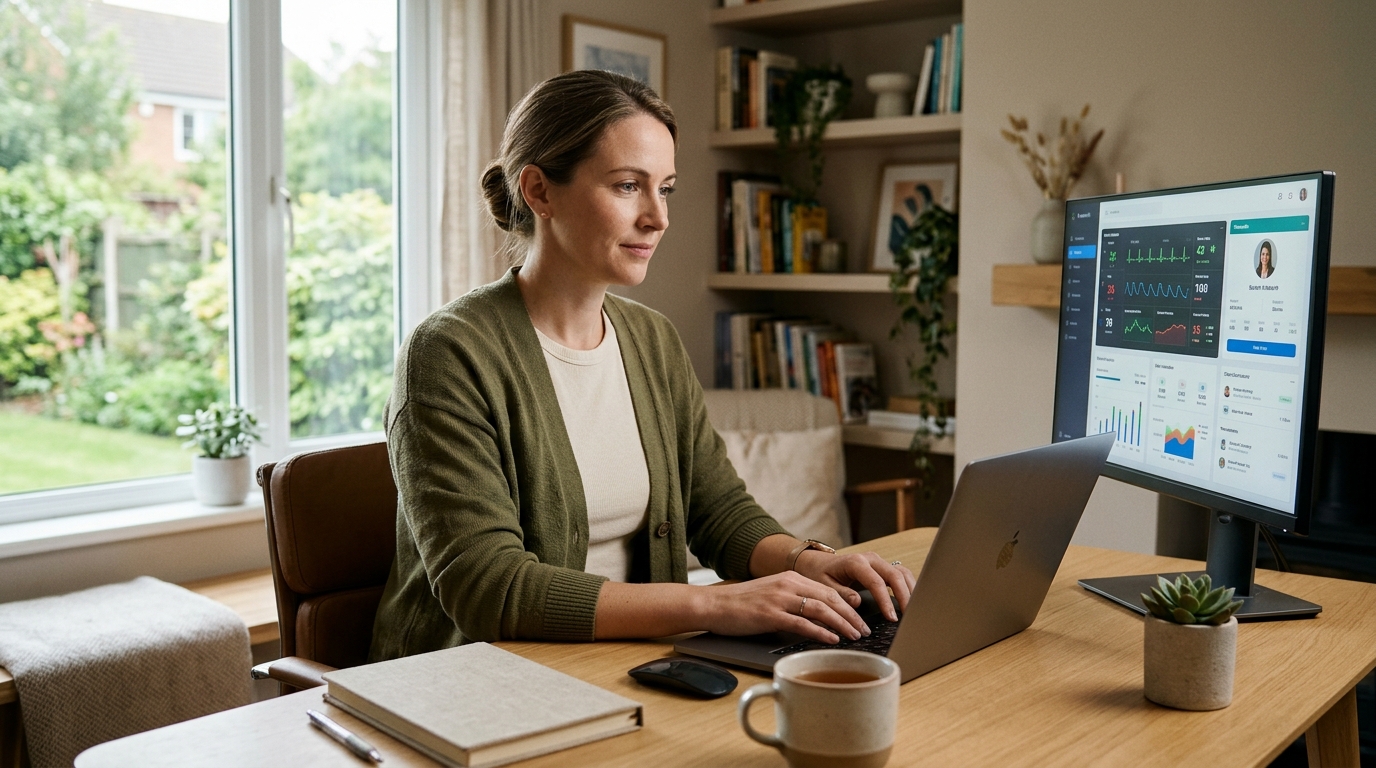
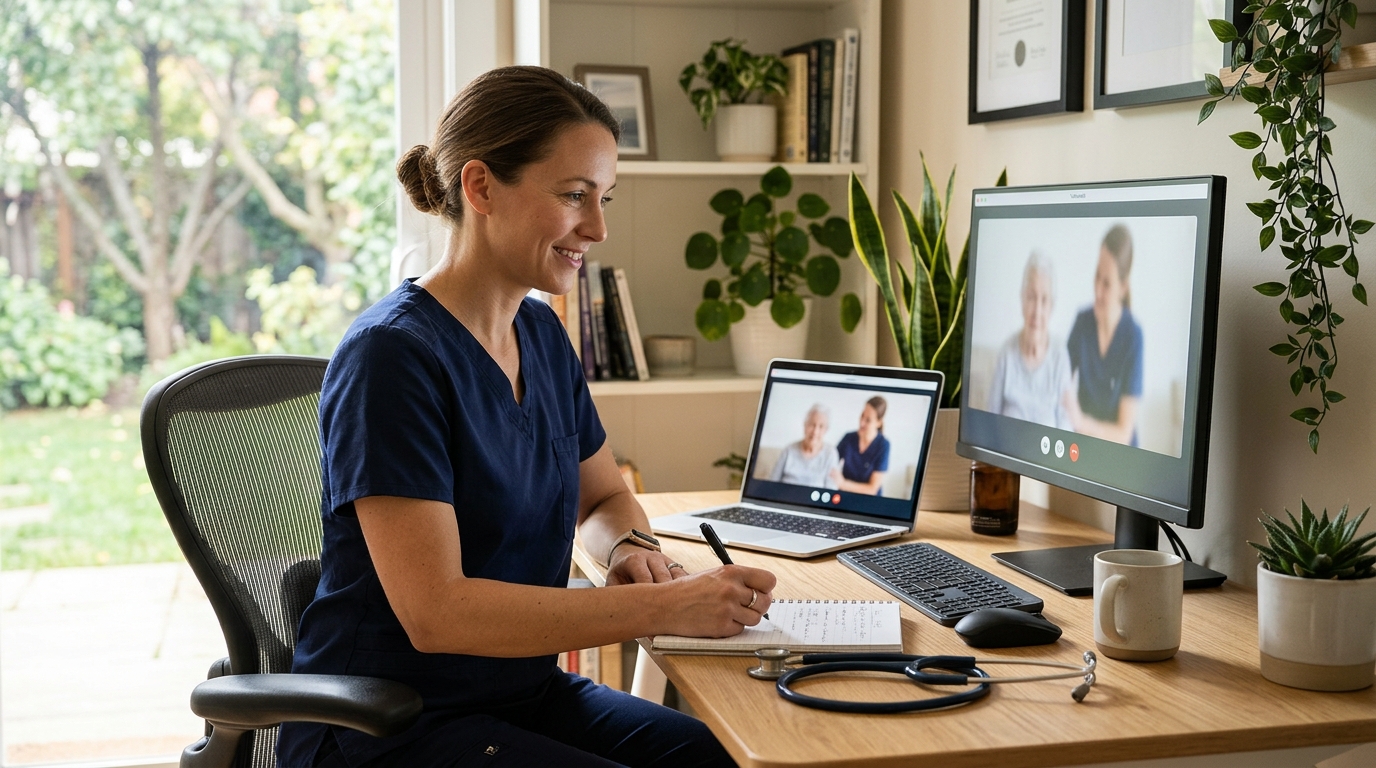
A licensed practical nurse makes a median $64,400 a year, according to the Bureau of Labor Statistics — but that figure, like most of what shows up when you search "how to become a remote LPN," describes bedside work, not the version of the job that happens from a kitchen table. Search for that exact phrase today and the results are almost all recycled: hacked university subdomains running affiliate content, aggregator listings repackaged as advice, and the occasional thin blog promising "top roles and salaries" without naming a single real employer. None of it tells you what licensing actually requires, what remote LPN jobs really pay by role type, or who is hiring right now.
This guide skips the recycled version and works from what's actually true: the licensing steps every state requires, live remote and telehealth LPN postings on JobSnag's board, and what LPNs who've tried to make this move say about how it really went.
What a remote LPN job actually looks like
"Remote LPN" rarely means diagnosing or treating patients by video — most states reserve independent telehealth visits for RNs and nurse practitioners. What it does mean, in the postings actually open right now, is non-bedside clinical work that still uses your license and your judgment:
- Telephonic triage and nurse lines — fielding patient calls, following clinical protocols, and routing people to the right level of care.
- Remote patient monitoring (RPM) — reviewing vitals data from home devices and flagging anything outside normal range.
- Care coordination and chronic care management — scheduling, follow-up calls, and closing gaps in care for patients with ongoing conditions.
- Utilization review (UR) and utilization management (UM) — checking whether a treatment or hospital stay meets medical-necessity criteria for an insurer or health system.
- Clinical letter review and claims support — documentation-heavy work for payers, with little to no patient contact.
The common thread: judgment and documentation over hands-on procedures. If you're picturing yourself running telehealth visits solo, that's usually an RN or NP role — but a lot of the infrastructure behind those visits, from intake calls to chart review, is staffed by LPNs.
The licensing path: NCLEX-PN and your state board
Before any of that is open to you, you need an active LPN (or LVN, the title used in a handful of states) license. The process is the same whether you plan to work bedside or remote, and it runs through your state board of nursing, not a national agency:
| Step | What it involves | Typical timeline |
|---|---|---|
| Complete an accredited practical nursing program | State-approved coursework plus supervised clinical hours | About 12 months |
| Apply to your state board of nursing | Transcripts, background check, application fee | Several weeks to a couple of months |
| Get approved and register for the NCLEX-PN | Once your board confirms eligibility, you register and pay the exam fee through Pearson VUE, which administers the exam | Scheduled within weeks of approval |
| Pass the NCLEX-PN and receive your license | A computer-adaptive exam covering safe practical nursing care | Results typically within days |
Requirements differ by state — Maryland's board, for instance, separates the licensure application from the criminal background check, while others bundle them. Check your specific board before assuming the process above matches exactly.
One thing almost none of the generic guides mention: your state of licensure matters more for remote work than it ever did at the bedside. Many remote LPN postings specify "compact license" or "NLC" — shorthand for the Nurse Licensure Compact, which lets a nurse licensed in one participating state practice across state lines in any other participating state without applying for a separate license. The compact covers LPN/LVN licenses as well as RN licenses, and it's effectively a prerequisite for a lot of national remote-employer roles, since the employer doesn't want to track licensing paperwork state by state. If you're licensed in a non-compact state and serious about remote work, that's worth researching before you commit to one state's program over another.
What remote LPN jobs actually pay
Pay for remote LPN work depends heavily on the type of role, not just "remote" versus "in-person." Real postings currently open show a wide spread:
| Remote LPN role type | Typical pay | Experience usually required |
|---|---|---|
| Telephonic triage / call center nurse line | Around $21–$30/hr | 1–3 years |
| Care coordination / chronic care management | $43,000–$58,000/yr | 2–3 years, direct patient-facing |
| Utilization management / clinical review | $58,000–$75,000/yr | 2+ years, UR/UM preferred |
| Compact-license remote roles (various) | Varies by employer and state | Usually 2+ years; license mobility is often the deciding factor |
The care-coordination figures come from an active posting at CareHarmony, which lists a 100% remote LPN care coordinator role starting at $21/hr with a path to $28/hr based on production, requiring an active compact license and three years of direct patient-facing experience. The utilization-management range reflects current listings from UnitedHealth Group/Optum, which regularly posts remote LPN roles in call-center, case-management, and clinical-letter-review tracks. Across almost every listing, the pattern holds: two to three years of hands-on experience before a company will consider you for remote work.
Who's actually hiring
Two employer types show up over and over in live postings: health-insurance payers and care-coordination vendors. UnitedHealth Group runs an unusually large and steady pipeline of remote LPN roles — telephonic case management, clinical letter review, and utilization management, most requiring a current compact license. CareHarmony, a smaller value-based care company, hires LPN care coordinators to manage chronic-care patients between physician visits, entirely remote.
Beyond named employers, the roles cluster by function. If telephonic triage and nurse-line work interest you, JobSnag's telehealth nurse jobs hub tracks current openings in that category. For the full range — case management, utilization review, care coordination, and more — the remote nursing jobs hub covers both RN and LPN postings, and our companion guide on becoming a remote utilization review nurse goes deeper on that specific path if UR looks like the better fit for your experience level.
What LPNs who've actually tried this say
The generic guides skip the part that matters most: getting hired remotely as an LPN is harder than the job titles suggest. On a r/recruitinghell thread about work-from-home nursing, one commenter described it secondhand but accurately: "My friend is an LPN, she has a couple of WFH days, sounds like some triaging." That's the realistic shape of it — partial remote work built around triage, not a fully remote role handed to someone straight out of a program.
On r/nursing, a nurse comparing remote pay to bedside work put it bluntly: "Most remote positions pay less than bedside unless you've got a whole lot of experience or find a unicorn position," adding, "I make about the same now working full time as I did working part time bedside." Their advice to anyone chasing a remote switch was specific: "Look for telehealth/triage positions, case management or utilization review" — which lines up with exactly what the live postings above show.
The takeaway from both threads and the job postings: remote LPN work is real, but it's not an entry-level shortcut. It's a second act, usually built on a few years of bedside or clinical experience that taught you how to make fast, defensible judgment calls — the same skill that now gets applied over a phone line or a chart review instead of at a bedside.
The bigger picture
None of this makes remote LPN work a myth, and it doesn't mean you need an RN to get there. It means the honest path runs through licensing first, a few years of hands-on experience second, and then a deliberate pivot toward the specific functions — triage, care coordination, utilization review — where employers are actually hiring remotely today. Get that order right, and the shift from bedside to home office stops looking like a long shot and starts looking like the next reasonable step in a license you already worked hard to earn.
Remote Telehealth Nurse — Patient Messaging (RN or LPN/LVN)
Frequently asked questions
Can an LPN work remotely without becoming an RN?
Yes. Remote LPN roles exist in telephonic triage, care coordination, chronic care management, and utilization review. Independent telehealth visits are usually reserved for RNs and nurse practitioners, but a lot of the non-visit clinical work behind those visits is staffed by LPNs.
How long does it take to become an LPN?
Most state-approved practical nursing programs take about 12 months to complete, including supervised clinical hours. After that, you apply to your state board of nursing and then register for the NCLEX-PN exam, which adds several more weeks before you're licensed.
Do remote LPN jobs pay less than bedside jobs?
Often, yes, unless you have several years of experience or land a role in a higher-paying track like utilization management. Telephonic and care-coordination roles frequently pay similar to or slightly less than bedside hourly rates, while utilization review and clinical review roles can pay more.
What is the Nurse Licensure Compact and do I need it?
The Nurse Licensure Compact lets a nurse licensed in one participating state practice in other participating states without a separate license. It covers LPN/LVN licenses as well as RN licenses, and many national remote employers specifically require a compact license because it's simpler for them to manage than state-by-state licensing.
Can a new LPN graduate get a remote job right away?
It's uncommon. Most remote LPN postings ask for two to three years of direct patient-facing or clinical experience, since employers are hiring for independent judgment with less direct oversight than a bedside unit provides.